Surveying to Find Out - Revisiting First Principles
My friend Blazer19 recently prompted me to take a read through Vincent Baker's blog series reflecting on Apocalypse World and Powered By The Apocalypse. It was an entrancing experience! I've spent the last few years hoovering up OSR and Post-OSR blogs, so it was nice to spend some time reading meditations from the fraternal twin sibling of the reaction to 3rd edition D&D. I think his essays helped me to reframe some of the findings from the last few playtests of the 18th-Century Surveying game, and I wanted to share them here to hold myself accountable to making it better. 2025 was year of the beta, but 2026 might be year of the Cadastre.
Table Stakes - Where Did I Start?
As I've discussed before, my first toe dipped in this premise was a 5th edition dungeons and dragons game where players were hired as escorts for a survey crew. This survey crew was unwittingly tasked with essentially laying out a magical siphon which would absorb primordial energy from the frontier and deliver it to a society of wizards. This campaign fizzled out, but the survey was basically set dressing for the players to march across a magical continent into the frontier with periodic adventures that would take them away from the caravan.
In retrospect, even though I wanted to center the agency of people encountered in the frontier region and highlight the villainy of the superstate executing the survey, this is still a very colonialist premise and one that I don't think I would directly revisit without some more interesting ideas presented by my friends xaoseed and Zak.
Where Did it End Up
When I revisited the premise last year, I successfully brought a game to the table about surveyors sent to work a plat. In the process of surveying, the normal (seeded) contents of that survey plat should become stranger/mutated/more dangerous because the process of surveying makes the area more entropic.
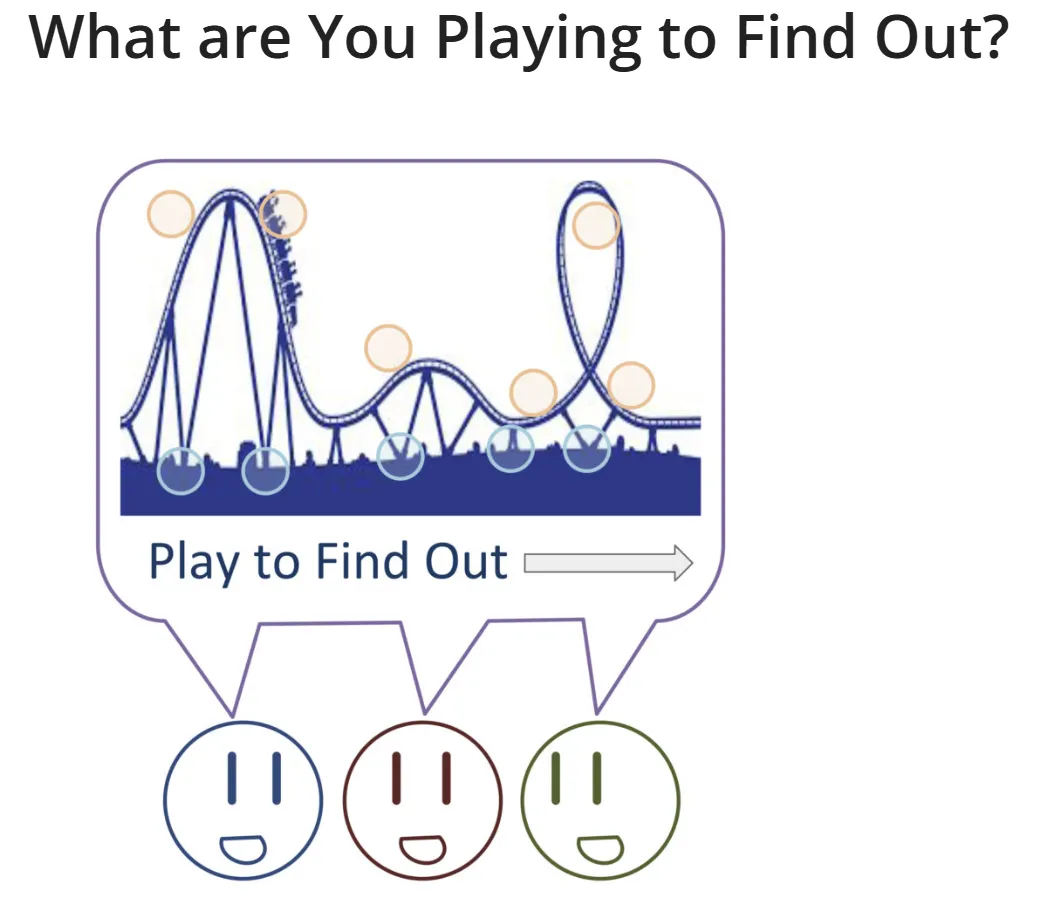
This playtested version was interesting. I enjoyed sitting down to run it, but it fundamentally failed to ask OR answer:
Vincent Baker's Powered By the Apocalypse Part 2
My players were pretty much marching along the plat that I had laid out for them and just rolling with the encounters that I presented them with. I annotated the map as they marched along and tried to fit the mechanical subsystems I'd designed into the shape of the play.
But were we playing to fill out the map? I guess that would be a good system design question. Were we playing to find the largest contiguous flat land for tobacco farming? That would be a level/scenario design question. I can't really answer, though, which indicates at least a lack of confidence but more accurately a lack of vision at this first pass.
What Worked and What Didn't
The playtests were fun because hanging out with my friends Will and Tyler is fun, but I feel now that there was a missing motivational core to this version of the game. I think the thing that worked best with these first two tests is that I really did feel like I was playing as a facilitator. The poker-based resolution in the second test certainly felt much more like play than just rolling dice on behalf of monsters in a traditional RPG. It still begged the question of "so what" that absolutely merits an answer if I want to make any more progress on this design. I'm not trying to just wrap 18th century aesthetics around playing card games!
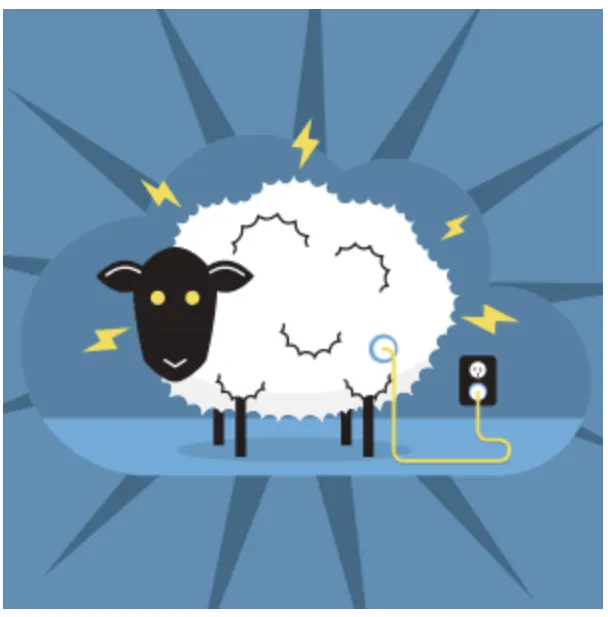
The procedural landscape generation meant that I got to find out alongside my players which elements landed where, but in turn I saw that my ideas to make the area stranger failed to land for either me or the players. None of us had "been there" before! What is the excitement to players encountering a sheep with reflective wool if they didn't originally see that the sheep started as normal grazing animals? My one player correctly identified the sheep as a potential source of wealth, which led to some fun emergent play of driving a small herd of sheep back to the city, but it's hard to tell whether that had anything to do with my level design and not just a player looking for something to do!
(https://www.eetimes.com/do-engineers-dream-of-electric-sheep/)
I think this is more than just a question of pre-seeding fixed landmarks to turn exploration into a gridcrawl with random encounters, I think there are fundamental missing elements that need to be fleshed out further in the next pass. As much as I love blorb, hierarchies of truth are not the problem here.
While I have a lot of affection for the guts of this game, I want to return to first principles. Ideally the first principles as augmented by my fellow blogging friends.
Assertion 1
Surveying is a tool of the state by which the land is categorized, rationalized, and valued. Surveyors are the hands and feet of the state but they are essentially disposable. Borders and boundaries ontologically imply enforcement and violence.
(Thanks to Conghal for sentence 3 of that assertion)
Regardless of status or title, the crews surveying America's purchased and colonized land were subject to the whims and extremes of nature. I think this validates our premise of a worker placement game. This is basically a level 0 thought, but if you are a thinking being and you find yourself in an area being surveyed, you can expect that the next people coming through your neck of the woods will be less friendly and less curious than some ragtag astronomers and geometers. That should inform how people the surveyors encounter react to their presence.
In a less grave vision of this statement, Thomas Pynchon's Mason and Dixon includes a vignette where their West Line takes them directly through the structure of a couple's farmhouse. The wife excitedly begins to speculate about where on the property their wedding was held, whether it was officiated by someone from the correct state, and whether that would be grounds for annulment.
Assertion 2
Some discoveries are better kept secret. Your patron sees the world through your lens. What are you telling them?
This was a clarifying pair of questions from Ktrey and Binary. In my reading about the Public Land Survey System, an important part of the township surveys was identifying water and natural resources so that the land could be properly valued. What sort of incentive structures could be built into the game such that the players may not tell their patrons about certain finds and findings? What would you keep from your patron? Who would pay you to keep those secrets? What are the consequences of censoring your survey?
Assertion 3
Nature is a complex system of systems that resists rationalization.
This has been a core principle of the surveying game concept since day 1, but it's still been the hardest one to realize in play. In James C Scott's Seeing Like a State, the author recounts several case studies of rationalist thought flattening the natural world to a legible set of variables that could be optimized. In one of these case studies, 18th century scientific forestry, the result is a near complete ecosystem collapse after maybe a single generation of high lumber yield. I think this real-world outcome is the challenge of the conflict/process that I want to model; when humans impose rationalism on nature, nature suffers the consequences.
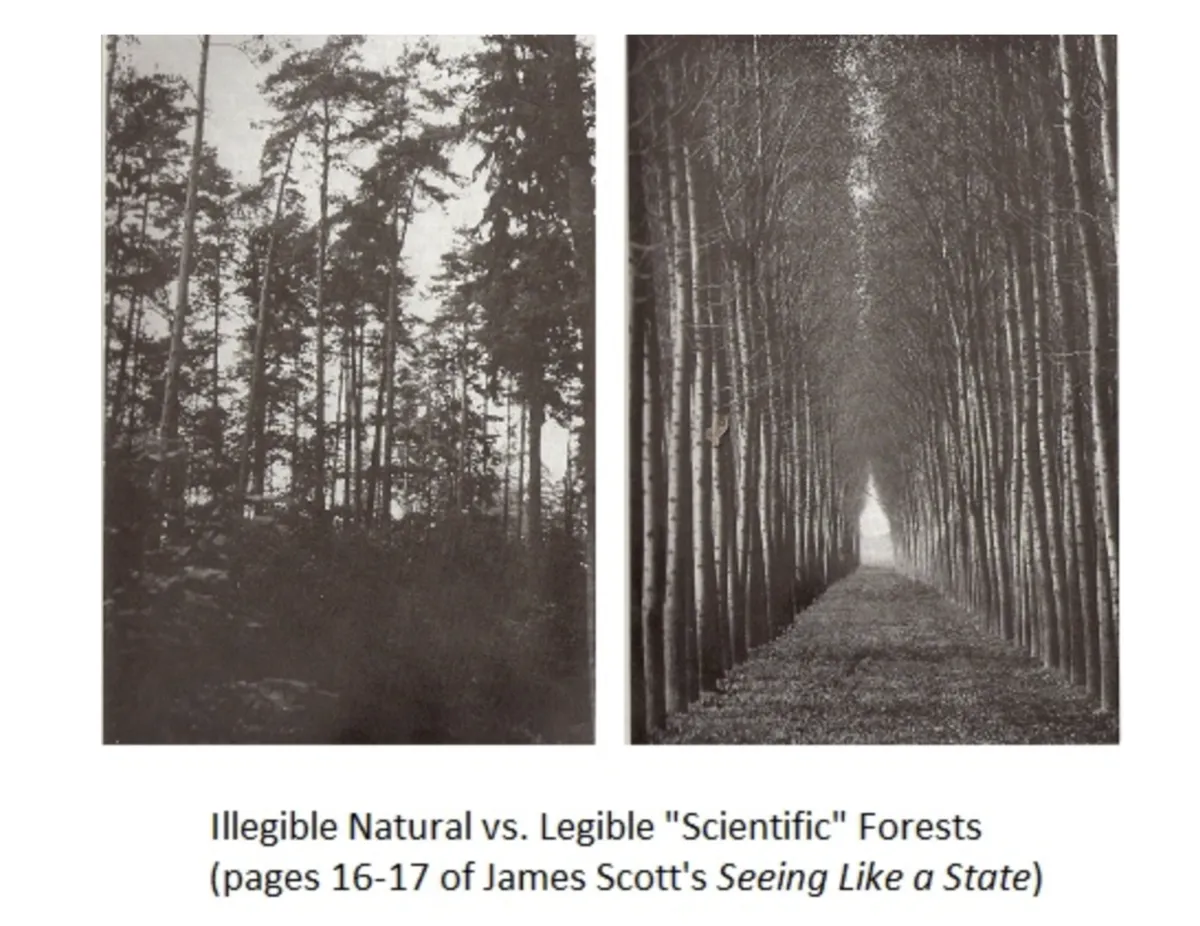
Image sourced from this article
The vision that I have for this game setting is instead that nature has an immune response to this rationalization. I think this is possible, but I think it will take at once a delicate touch and a firm hand. I require delicacy because I don't want to create a setting which ignites indignation at the gall of nature to oppose its valuation, but I require firmness because subtlety is dead in 2026. Nature's ability to "raise the stakes" that we explored in the second playtest was an exciting step in the right direction, but I don't think that it will fit every situation.
So What Comes Next?
I made the comment above that the procedural generation of the contents of the survey diminished the sense of the world getting stranger, but that's not exactly true. There were two times that I thought this concept clearly came through.
The first was that on their first crisscross back across the plat, the party happened to encounter a mysterious lightning rod twice. Because it was the same horizontal coordinate in the grid each time, I ruled that really they were seeing the same rod on the northern horizon the second time. At this point they had accrued more entropy, so I applied a mutation to the rod and narrated that the glass at its base was acting as a polychromatic henge. Seeing something in the environment and then seeing it change was exciting and it led to better role play. The players wanted to experiment with the henge and find ways to make it work for them.
The second was the case study I discussed after the second playtest, where the player got to see the situation at the lake grow weirder in real time from a first person perspective using the poker subsystem. While I think I would run this scene differently in a future test, it properly centered something familiar changing as a rationalizing force spent more time in an area. Again, as nature raised the stakes in a hand of poker, the player realized that they were potentially in over their head and had to be very confident in both their fictional positioning and the quality of their play.
This finally gets to the point of what I've been meditating on today. I think this surveying game could compellingly portray the narrative conflict of Human vs Nature, but I think neurotically fixating on conflict without working through a more intentional model of that process risks leaving any finished game hollow.
To directly borrow the Ursula K Le Guin quote that Vincent Baker invokes,
Conflict is one kind of behavior. There are others, equally important in any human life, such as relating, finding, losing, bearing, discovering, parting, changing. Change is the universal aspect of all these sources of story. Story is something moving, something happening, something or somebody changing.
As I take the next design pass on this game, I want to recenter the procedures, system, and play of this game around the changes that happen in this world when humans draw straight lines on a curved earth. I hope yall are interested in exploring that journey with me!