Renovation as a Model of Change
Last time, we talked about the premise of a worker placement megadungeon renovation game. I've been tickled with the reception of the concept, so I wanted to share what I've been researching this week.
The promise of a megadungeon campaign is that players have the chance to explore and change a space over which they develop some level of familiarity, intimacy, and mastery. They make decisions during one delve that shift the balance of power between competing factions and make for a novel experience in a familiar space during the next. Typically, however, the old-school games that I love enact this change through extraction. Political change in the megadungeon is driven by magic users stealing the Lich's scepter or magic-sword-wielding-fighters slaying the wererat king. It is a change enacted by the creation of vacuum which the mythic underworld abhors.
My 10,000 foot goal with the thought experiment is to see how the toyetic space exploration play shifts when the mode of change is no longer extraction but (and I'm going to do some rhetorical sleight of hand in a bit here so bear with me) restoration. Now, I do want to acknowledge that our premise, renovating a dungeon into a museum, has some classic colonial tropes of extraction embedded within it that I don't want to leave unexamined during development.
I have a couple of points I need to work through and I am staunchly opposed to outlining, planning, or editing blog posts so let's plunge into this together.
Models of Change
The Bakers' writing on models of change really did shape how I think about and write about games. Their writing focuses on how relationships change through play, but the nature of dungeon adventure gaming is more focused on the changes that players impose on their environment. Last week I made this internal observation and then stopped because I wanted to refine it some more before I shared it out. To refine it, I picked at a neat idea that my friend and collaborator Zak H made - by introducing both a "Sponsor" and a "Curator" as patron characters in the microfiction I wrote about Abbey, I had introduced an opening for divergent goals for our players. Additionally, by personifying Abbey, I had created space for her to also act as a patron or faction in play. So what would these characters want out of the renovation project?
At the highest level, the Specialists have been hired to make some portion of the Abbey campus a safe living history museum for future visitors; I think there should be some wiggle room here that doesn't force completionism. The Curator is focused on the historicity of the project, so she wants the accessible spaces to reflect something like their original design or purpose. The Sponsor is focused on getting a return on investment; she purchased the entire campus and expects to get her money's worth out of spaces that can be employed profitably and productively. The Abbey wants her body and her sleepwalking memories to be properly respected. Then, as a final requirement, I anticipate that there will be some level of time pressure to make key milestones - more on that later because I can see it being divisive at best and unfun at worst.
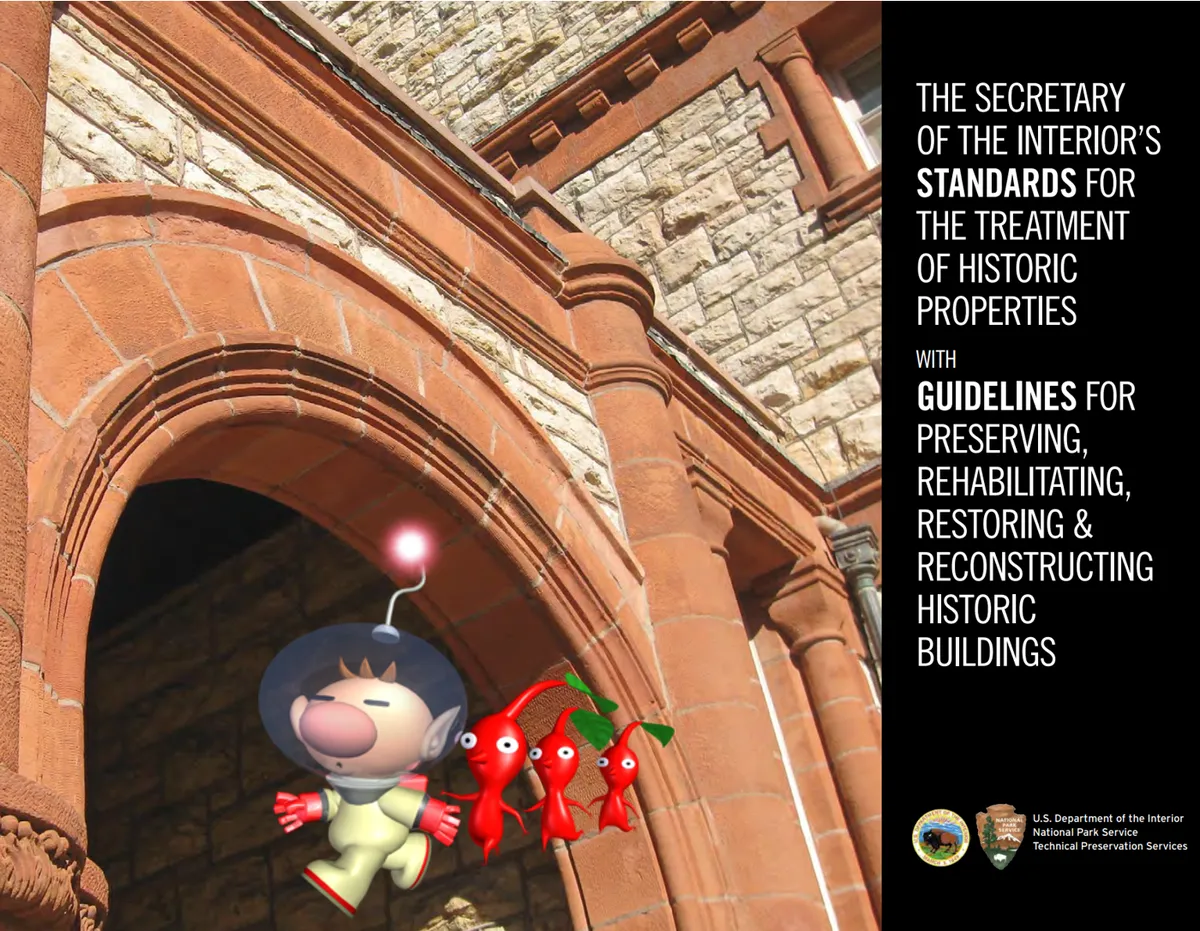
With these (hopefully) crosswise "desirements" as we call them at work, we can now ask what it means to pursue and achieve them. I am very fortunate to have a good friend who worked in historic preservation architecture while pursuing licensure, so we chatted about directions to research. He pointed me toward the Secretary of the Interior Standards for Treatment of Historic Properties, which I think will be foundational in this part of project development. This document outlines four key "treatment" strategies for historically-significant properties: Preservation, Rehabilitation, Restoration and Reconstruction.
Treatment as Change
Let's quickly summarize these four treatments, and then we can talk about what they have in common.
Preservation
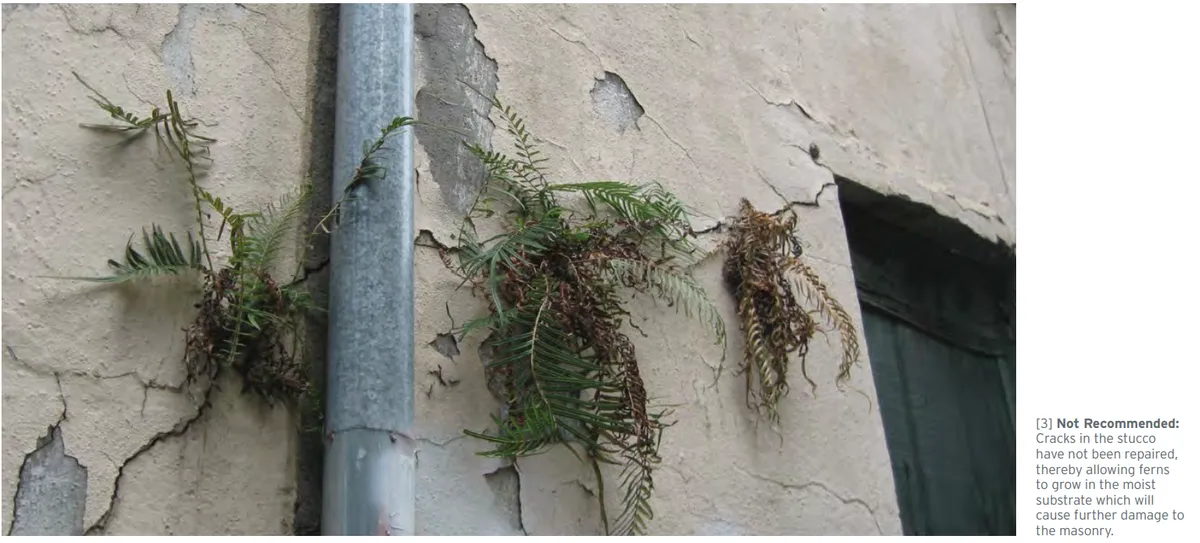
As you would infer from the name, Preservation is leaving a property as close to its current state as possible.
When the property’s distinctive materials, features, and spaces are essentially intact and thus convey the historic significance without extensive repair or replacement; when depiction at a particular period of time is not appropriate; and when a continuing or new use does not require additions or extensive alterations, Preservation may be considered as a treatment.
The hierarchy of Preservation treatment is:
- Identify, retain, and preserve historic materials and features
- Stabilize deteriorated materials and features as a preliminary measure
- Protect and maintain historic materials and features
- Repair - stabilize, consolidate, and conserve
- If absolutely necessary, limited replacement-in-kind
Rehabilitation
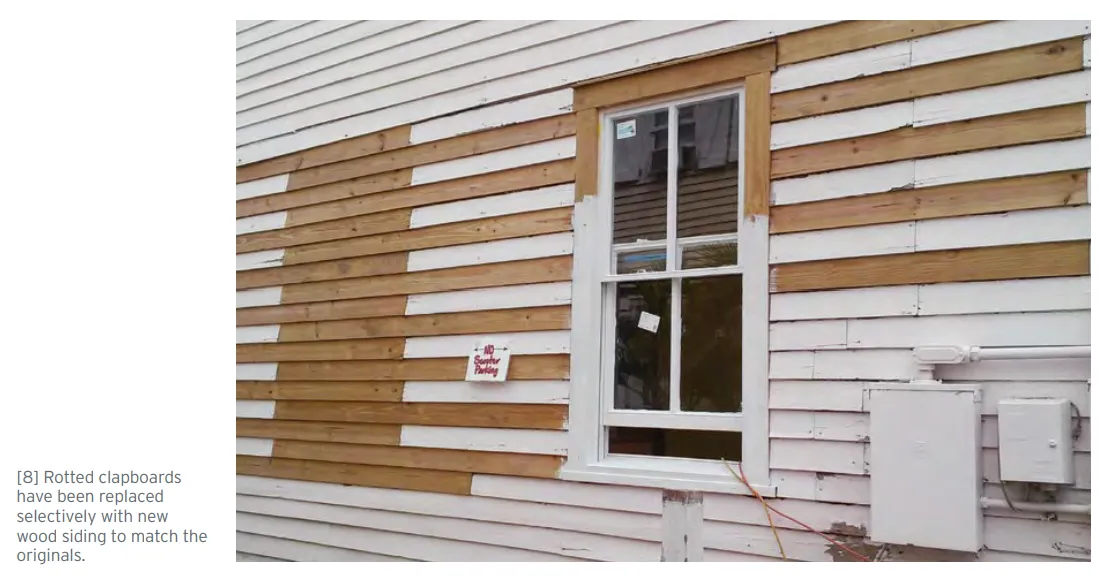
Rehabilitation is an attempt to find a new compatible use for the property.
When repair and replacement of deteriorated features are necessary; when alterations or additions to the property are planned for a new or continued use; and when its depiction at a particular time is not appropriate, Rehabilitation may be considered as a treatment.
The hierarchy of Rehabilitation treatment is:
- Identify, retain, and preserve
- Protect and maintain existing features
- Repair - stabilize, consolidate, and conserve
- Design replacements for deteriorated features and perform the replacement
- Alteration of features
Restoration
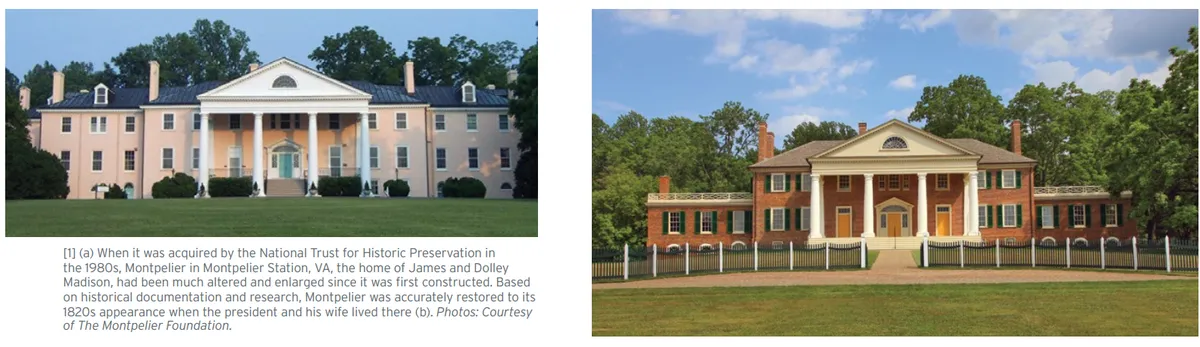
Restoration is the attempt to re-create the appearance of a specific point in the property's history.
When the property’s design, architectural, or historical significance during a particular period of time outweighs the potential loss of extant materials, features, spaces, and finishes that characterize other historical periods; when there is substantial physical and documentary evidence for the work; and when contemporary alterations and additions are not planned, Restoration may be considered as a treatment.
The hierarchy of Restoration treatment is:
- Identify, retain, and preserve
- Protect and maintain features from the restoration period
- Repair - stabilize, consolidate, and conserve
- Replace extensively deteriorated features
- Remove existing features from OTHER historical periods
- Recreate missing features from the restoration period
Reconstruction
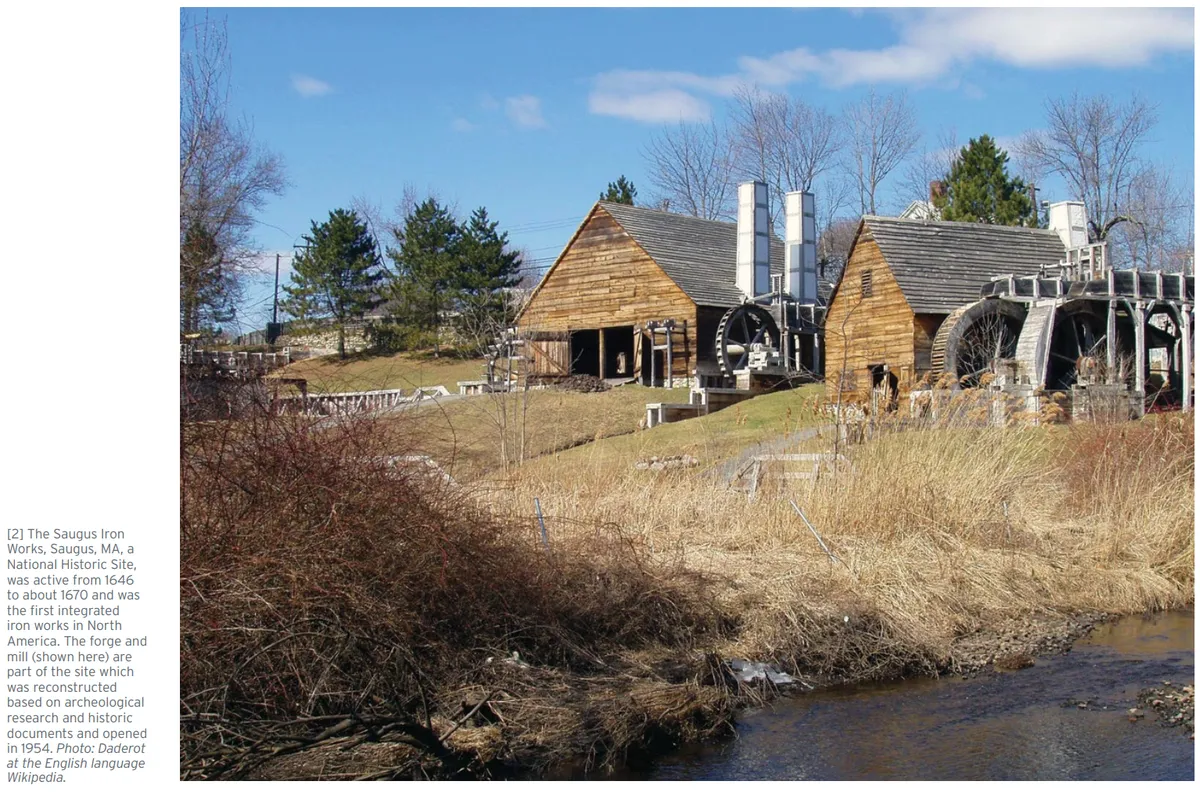
Reconstruction is the attempt to depict, by means of new construction, the form/features/detailing of a non-surviving property. This is primarily for interpretive purposes.
When a contemporary depiction is required to understand and interpret a property’s historic value (including the re-creation of missing components in a historic district or site); when no other property with the same associative value has survived; and when sufficient historical documentation exists to ensure an accurate reproduction, Reconstruction may be considered as a treatment.
The hierarchy of Reconstruction treatment is:
- Research and document historical significance
- Investigate archaeological resources
- Identify, protect, and preserve extant historic features
- Reconstruct non-surviving building and site
But is it a Game?
You can probably see where I'm going with this. The four recognized treatments all require some level of investigation of a space to understand what in the hell the space was originally for. I imagine that the Abbey complex is in some state of disrepair and misuse, but there will be Handles for players to interact with in different rooms to uncover the Hidden or Secret historic purposes of the rooms and courtyards.
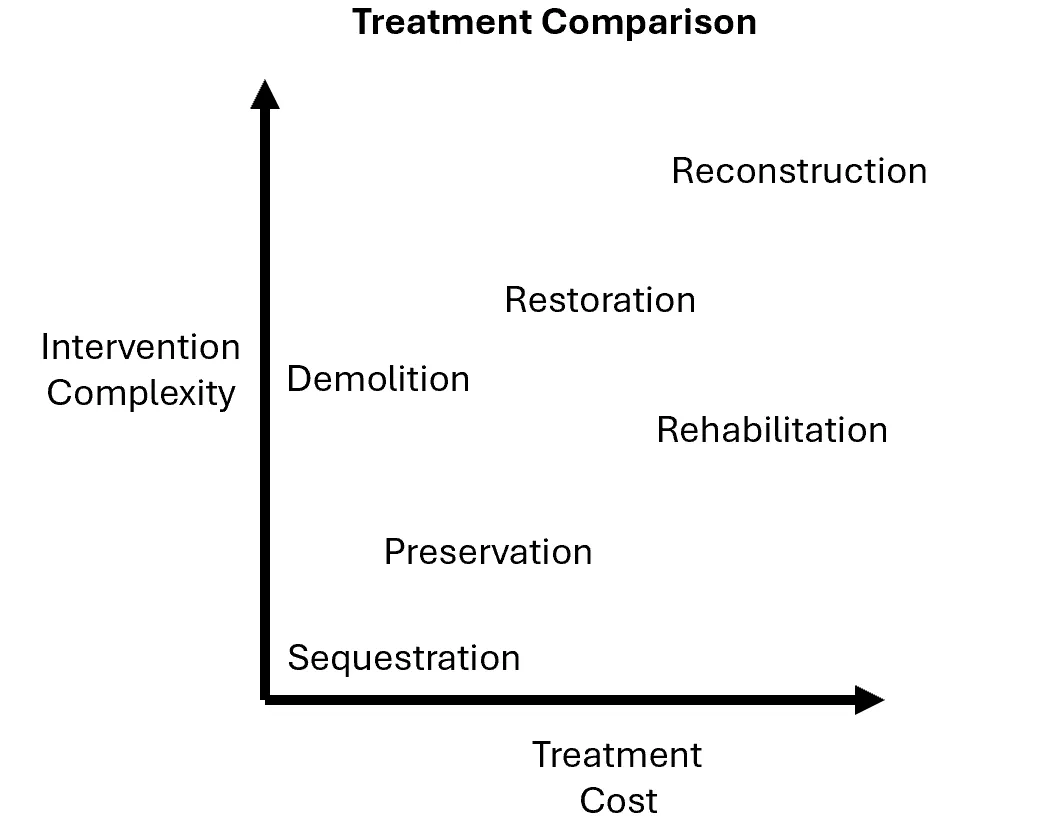
Then, based on the conditions of what is left in the room, players can discuss how they want to treat it. I think we can absolutely gamify the four treatments as something like clocks. I've intentionally listed the four treatments in order of complexity or intensity of intervention, so Specialists can probably stabilize and Preserve a room in the Abbey complex by themselves during a delve, whereas the more complex treatments may require a combination of advanced minions, time, expense, and outside help.
For the sake of completeness, I think our game adds two more verbs to our Specialist toolkit. When a space is of low historic value relative to the complexity of treating it or Specialists decide that it is necessary, a space can be Sequestered, preventing future museum visitors from wandering into or through it. Alternately, when a space is too hazardous to maintain, Specialists can incur the cost and consequences associated with Demolition. This can either precede a Reconstruction or it can leave the space fallow.
Change Over Time - A Play Loop
So now we know our six key verbs for renovation: Sequester, Preserve, Demolish, Rehabilitate, Restore, and Reconstruct. Our treatments then have sub-operations that require investigation, identification, cleaning, repair, and demolition. These sub-operations are what our Specialists should be doing during a delve, they are what will support the play experience of exploration. But is it reasonable to expect that our Specialists are actually, say, performing construction activities? Designing replacement features during Rehabilitation? Maybe! But these interventional operations seem like they might take place on more of a downtime scale than a delve time scale.
Games like His Majesty the Worm and Trespasser 2e are very explicit about the difference in time frame or scale based on the phase of play. Dungeon delves take place over the course of (classically) ten-minute turns. I've worked with some incredibly impressive contractors, but even basic pine construction operations are better measured on the order of days or weeks, so we will probably be better off with some level of time abstraction that lets us separate our minute-to-minute work from our design, research, and construction. Let's say that we have two core phases of play: Exploration and Management. We've already talked about our Exploration jobs, but what do players do during Management?
Management probably takes place on the order of a week at a time. The Management phase is when players follow up on leads, make plans for future delves, and source outside help for the most intense interventions. If masons, carpenters, and fabricators need to be brought into the Abbey to finish a treatment, then the players need to find ways to guarantee the safety of those laborers! I think that aspect of carving out safe routes, creating buffer areas, and protecting normal people from the hazards of the campus makes for a compelling use of time-as-a-resource. This also creates the momentum for real, serious change of the Abbey in between delves in the way that hiring a team of excavators when you are managing a domain in OD&D changes dungeoneering.
Once we have this flow of Exploration Days and Management Weeks, we can orient the overall campaign around a calendar and balance the rate of play against deadlines. This may not be an appealing play driver for everyone, but I think it is a compelling part of games like Harvest Moon or Pikmin. This also makes the downtime/management phase a larger-scale worker placement activity to complement the minion placement that I want to explore in the delves.
Next Directions of Inquiry
I think the two directions I want to go next are a better definition of our space and a better definition of our characters. Now that I know roughly what families of actions I want to allocate to Exploration and Management I can think more critically about our Specialist archetypes, which I know people are excited to see developed. I also want to start a logical decomposition of the theoretical Abbey complex into spaces and conditions; there is lots of documentation on medieval abbey architecture thankfully, but I want to have some idea of the families of hazards for players to tackle. I'm imagining a low-lying area that is flooded, a wall-breached area that has become overgrown with wildlife, and a living area that's been occupied by bandits. If we are targeting a ~100-room kilodungeon, then I probably want 4-5 clusters of areas to create logical "levels" for players to engage with, then the border areas become especially hazardous and complicated.
Thanks for sticking with me on this one, I knew it would be a doozy but I've loved composing it! If you are a fellow USian, then have a happy Thanksgiving holiday!