A Megadungeon Thought Experiment
The megadungeon has been my favorite premise for adventure campaigns for a few years now. At the cost of some upfront prep, you can create an enclosed and toyetic space for players to visit, experiment, return, and see change over the course of play. For the past month or two, as I have been turning over metaphorical rocks to look at the cool conceptual bugs under them, I've been returning to worker placement as something of a white whale of a play mode/mechanic.
About a year ago, Anne at DIY & Dragons started a thread in a shared server to discuss a long-gestated idea for a campaign she called Dungeons & Decorators, wherein players are adventuring thieves and collectors aiming to fill a shared home with beautiful and exciting possessions.
These three ideas, worker placement, megadungeon exploration, and space decoration, finally collided like low earth orbit satellites a couple of weeks ago in my noggin.
I think part of why my worker placement survey ideas kept getting in their own way is that I, as a writer and game runner, really struggle with conveying wide-open spaces and the possibilities for action within them. I think Cadastre came together as a project when I focused the scope to the line-of-sight conceit. I feel much more comfortable (for better or worse!) writing and running the confined spaces of a keyed dungeon area, and I was inspired by Marcia's post at Traverse Fantasy about the implied worker placement in OD&D.
But this worker placement Marcia described is still players making decisions about assigning their 1:1 avatars (and perhaps their hirelings or henchmen) to specific tasks within rooms. Hence my gnome- or pikmin-scale atomic henchmen idea; is there design space for each player to have some small squad or platoon of worker units that can be commanded to tackle laborious tasks in a discrete, keyed space? It feels fruitful!
But the last element, space decoration, fell into place as sort of a natural neighbor to what excited me about Cadastre and The Wax Marches - how can you make non-violent exploration the bedrock of play within an OSR-shaped tradition? Both of my exploration games ended up country miles from OSR games, but I am inclined to think that megadungeon exploration is best served with the technologies honed in the OSR community: time as a finite resource, abstract problem solving, and keyed locations as containers with interfaces. In a megadungeon context, can you extract fruitful play from exploration and spatial interaction? Do you need codified rules for violent encounters if that is not a pillar of play? I'm interested to explore the idea and I did a little writing yesterday to place myself in this hypothetical megadungeon.
The Setting
The house is old. She isn't ancient. Just, old. She was always a house. From its conception, she was a place for living. Habitation. Existence. The house was built by paid hands with the occasional sporting hammer stroke from hands more suited for pen and paper. The house never dreamed herself a temple or a palace, but she was always proud that she contained many rooms.
The heyday of activity in the house is long gone. There remains no living memories of her first owner, a rich young playwright and his wife. The house stayed in that family until the whimsy of her first generation dulled to Serious, Responsible grandchildren who saw her as a complicated entry on a ledger. She was sold to another family, a beloved painter who could appreciate her grandeur on her own terms. She was always proud that such beauty was created within her. The painter was already old when his path crossed the house's, and their time together was brief.
The house remembers that the papers bearing her rights changed hands many times after the death of the painter. Few of those hands were notable, but she remembers the first day that the Abbess held her deed and smiled. See, the house had never given much thought to the land on which she contentedly sat. She had been dusted with the pollen of the gardens and orchards worked with rougher hands than those that tended her hearth, but there was always enough going on within her sturdy walls that she did not have to consider what lay beyond them. The Abbess had a vision, however. A vision that was not shared with the house until the day of her consecration to The Church.
The lonesome house, once the only building on the horizon in any direction from her roof, found herself with neighbors. They had proper names like Chapel and Narthex and Refectory. Her stables and brewery brimmed with life after generations of disuse. She beamed contentedly whenever the stained glass of her new neighbors reflected onto her. These exuberant years within the new cloistered walls were the happiest of her life since the death of the playwright. She knew that the title belonged to the entire campus, but she took on the name Abbey for herself.
Abbey's years of joy were not to last. Modernity encroached on the Church and the cost of maintaining her campus could not be borne by the aging faithful denizens. She watched with sorrow as doors within her body closed for the last time and the activity of the living humans petered out. In her melancholy, she chose to sow her memories into this silence as she recalled her generations of residents. The most fruitful memories were always of the generations who so loved her that their bodies were interred in the grounds within her walls. She found that she could remember them so clearly that it felt like they still walked her halls.
Or,
Well, no, that can't be right. Those men and women have been gone for so long. And yet here they are, as plain as day. If there were anyone here to second-guess her, Abbey would have a difficult time explaining herself. But no one is here to second-guess her, so why shouldn't she just enjoy and hold on to the memories? It is...odd, however, that the painter and the Abbess have such divergent aesthetic opinions. And they never had a chance to express that to one another in life, so it's strange to see them arguing in Abbey's memories. Oh dear.
The days march on and entropy wears on Abbey's aging bones, but she stands proudly amidst her dreams that bleed into one another. There have been incursions by living humans into her walls, but their hands do not bear her deed and thus do not bear her approval. In fact, the only point of agreement among her sleepwalking memories of residents is that intruders are unwelcome within her walls.
She is stirred from somnolence one day when she feels the rustle of her deed, long abandoned in some folio in some cabinet in some drab office, removed and examined for the first time in years. This is her first introduction to The Curator. The Curator has come into the possession of Abbey and her campus with the help of The Sponsor. They have seen her regretful decline over the last decades and want to restore her to a vision of her former glory so that she can be on persistent display as a museum of historical significance. Their initial attempts to rehabilitate Abbey with traditional contractors were...unsuccessful. Rebuffed. The type of failure that requires a cash payment and a non-disclosure agreement. This is why The Curator and The Sponsor have turned to a team of Specialists to restore Abbey.
The challenge ahead of the Specialists is that while Abbey's sprawling estate is formally abandoned, she is not empty. Her walking memories have taken on lives of their own and do not want to see their home change. Flora and fauna have begun to reclaim territory for themselves. Various groups of humans have sought shelter, silver, or secrecy from the world within her walls and live in tense competition with the animals, plants, and spirits all jostling for a place to call home.
Specialists
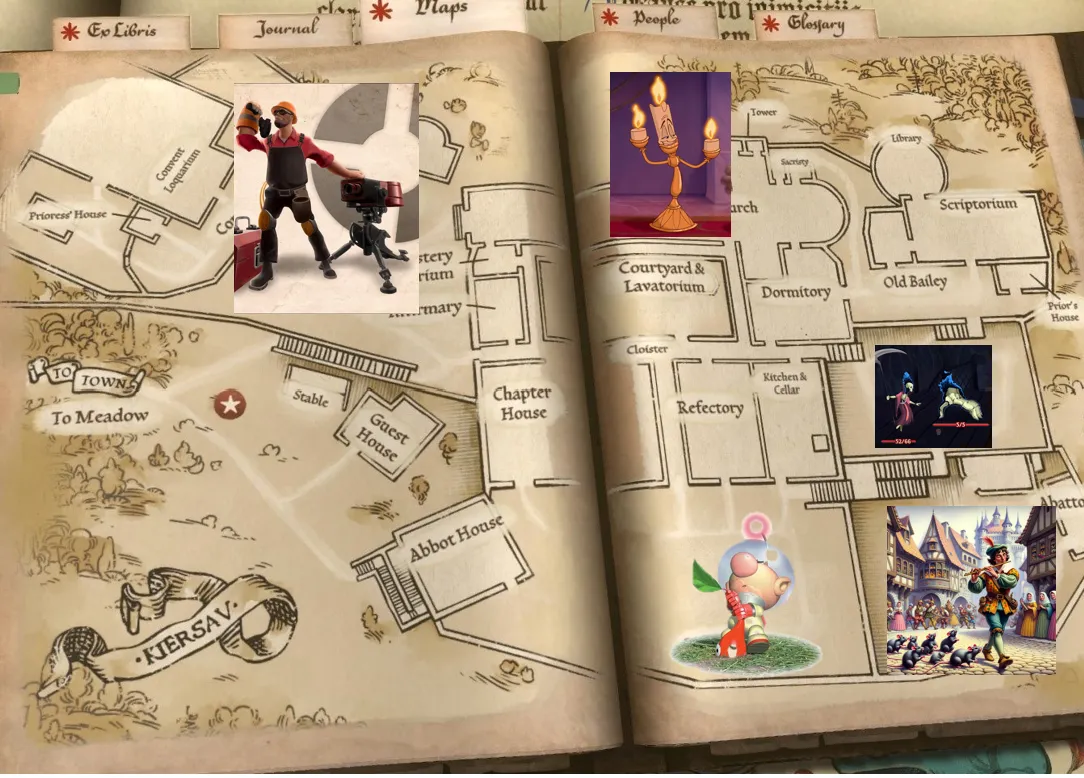
Specialists are somewhere between exterminators, general contractors, and fortune tellers. Ghostbusters with an HGTV show. Each Specialist can build, grow, summon, or befriend atomic allies that help them with the monumental task of renovating the Abbey complex. The five Specialist types I have in mind are Occultists, Magicians, Gardeners, Pied Pipers, and Engineers.
Occultists
An Occultist is a necromancer who assemble small skeletal constructs, with the base unit being crawling hands. He can create more units by finding bones and dead biomass.

Magicians
A Magician animates small objects, tools, and appliances to accomplish tasks for her. She can only concentrate on some small number of animated objects at a time.

Gardeners
A Gardener grows small vegetable creatures that can be directed toward simple tasks. He must maintain a healthy plot of soil to allow them to grow and sleep.

Pied Pipers
A Pied Piper recruits wild animals and other creatures to the cause. She must keep up their morale for them to stay loyal.

Engineers
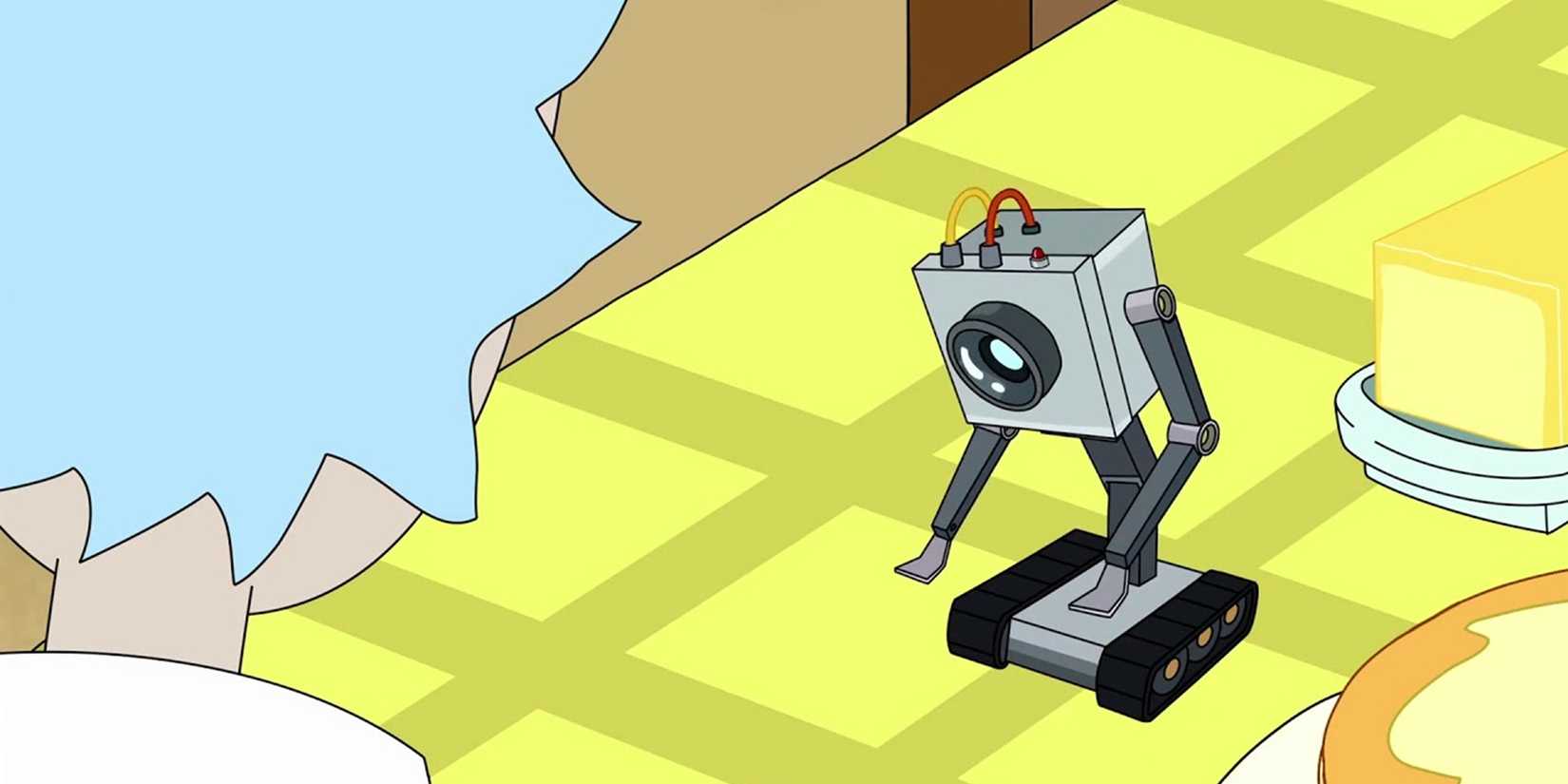
An Engineer can build automata to accomplish specific tasks, but they tend to require densely-stored energy that is not readily available in a medieval abbey complex.
Design Direction
My mental outline for where I want this game to go is that:
- I want a capsule setting for the game, so I would develop Abbey as some sort of kilodungeon. Likely somewhere in the ballpark of 100 keyed rooms. Having recently played some Pentiment I think an abbey is a big, fun, physical space to work with.
- I want the five summoner archetypes to feel unique from one another; their resource management minigames should feel distinct and flavorful.
- I don't intend for combat to be a pillar of this game, so I want to direct that complexity budget toward a problem-solving mode focused on restoration and renovation. In particular, I want there to be tension between the interests of The Sponsor, The Curator, and Abbey's vision of herself.
Let me know what you think! I will probably bounce between this and SHAG as we batten down the hatches for winter here in the mountains but it feels like a fun creative project.