Territorial Queen Bee Ambitions
Howdy! It's been a crazy week and a half but in the small hours I've had time to work some more on Ambitions. Today we'll look at a case study on the second rung of our Maslow's Hierarchy of Needs, Territory. In particular we'll look at the External version of this Ambition, which I'm calling Conquest.
European honeybees, the bog-standard honeybee that most of us interact with, tend not to be horribly territorial other than directly protecting themselves and their nests. However, in the last few decades we have seen hybridization of the European honeybee with the Africanized honeybee (A.H.B., or Apis mellifera scutellata). If you've ever heard of killer bees, this is usually what people are talking about. The Africanized honeybee was first introduced in South America to increase honey production, but they have rapidly spread north due to behavioral adaptations that also make them aggressive, protective of their hives, and likely to abscond from a stressed hive to usurp a healthier colony.
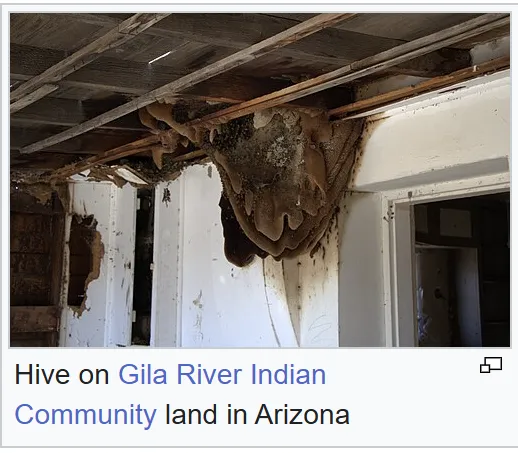
This is a perfect inspiration for our game! The adaptations of the A.H.B. also naturally lend themselves to the tension we are exploring with Ambitions; these bees tend to produce huge populations that chase and attack intruders in their territory over wide ranges at the cost of being somewhat less efficient at resource gathering. In order to consistently meet the ruthless demands of the queen, players will need to maintain high populations and gather large volumes of food. Let's see what this looks like in the language of our game.
Family of Ambition: Territory
Location, location, location. A beehive is more than just its population and its structure. The colony physically occupies space within its ecosystem and its sisters project a footprint across its domain. Members of the hive must be acutely aware of the hive in relation to local lands and waters, and from this awareness emerges a gestalt knowledge of Territory.
When a Queen Bee turns her ambitions toward Territory, she may be seen as broad-minded and worldly. She may be seen as provincial and parochial. She may avail her bosom to neighboring colonies or she may crush them in her mandibles.
A Queen Bee articulates her Territory ambitions through Doctrines.
- Doctrine of Protection: Fortification
- Doctrine of Diplomacy: Embassy
- Doctrine of Conquest: Colonial Charter
EXTERNAL: Conquest
General Tendency: A Conquest-oriented queen tends toward ruthlessness. She sees the destruction of her rivals as the path of least resistance to security for the hive. Her hive is the rightful inheritor of the domain and she is proud to raise her daughters to be equally cutthroat usurpers of neighboring colonies. Peaceful coexistence is a last resort.
Healthy Expressions of Ambition: Strategy, cunning, confidence
Pathological Expressions of Ambition: Violence, neurosis, antisociality
Initial Adaptation: Alarm Zone. Field bees may be commanded to monitor an area of up to 3 hexes during the Waggle Dance phase. If another organism attempts to forage in the Alarm Zone during the Season, the field bees will pursue that organism back to its home and report the location to the home hive.
Doctrine: Colonial Charter. Whenever the Queen Bee becomes aware of another insect nest, she composes a charter to either destroy or usurp it. Progress can be made on the charter by committing field bees to reconnaissance, sending field bees to attack, or committing resources to a Queen Brood Cell to grow a usurper queen who may seize the nest. The charter is fulfilled when the nest is destroyed or a governess is installed. Failure to progress a charter drives the queen toward a negative disposition.
Fulfilled Adaptation: Tripwire. If the hive fulfills at least 3 colonial charters during the reign of the queen, the colony gains the ability to track movement of all organisms within their biome.