Sitcoms: a Model for Resisting Change
Hello! Long time no blog. The last month has been busy as all get-out and I haven't been trapped inside by a snowstorm in a little while, so I've been occupied with my day job and a furniture project that has been going fairly smoothly. I do want to write about a fun thought exercise in the meantime.
To set the stage, I've been thinking about card-based ludemes (game concepts/units of play) a lot this year. I have the most familiarity with Blackjack and Poker, which is why you've seen those elements show up in Hellbenders and Cadastre, but these represent a pretty small portion of card mechanics. I've spent some time reading about historic card games and ended up digging into the history of trick-taking games. In particular, I've enjoyed reading about "Ombre" (bastardization of L'hombre or El hombre, "the man").
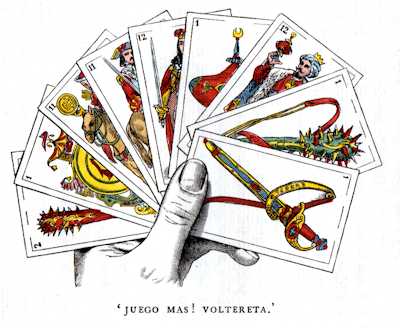
Ombre is a three-player card game from the 17th century where, at the top of a hand, players bet on who will take the role of The Man. Each player is then dealt nine cards in order to play nine tricks. The Man wins the hand if they take 5 tricks or manipulate the opposing players into splitting the tricks 4-3-2. The Man is bested if an opposing player manages to take five tricks, tie The Man with four tricks, or all three players take an even three tricks. The specifics aren't important, but I liked seeing how the game is not necessarily about personally winning the hand; there is a natural "coopetition" between the opposed players in attempting to best The Man. I wanted to explore what opportunity this opens up as a role-playing mechanic!
A Quick Review
I meditated in solitude on this question (read: periodically posted in designer chatrooms that it was something I was thinking about) until my friend at Dungeon Mecha asked if I had heard of Tales from the Junior Ganymede, a "small trick-taking RPG" by Galen Pejau. I certainly had not! I gave it a download and fell in love with the game.
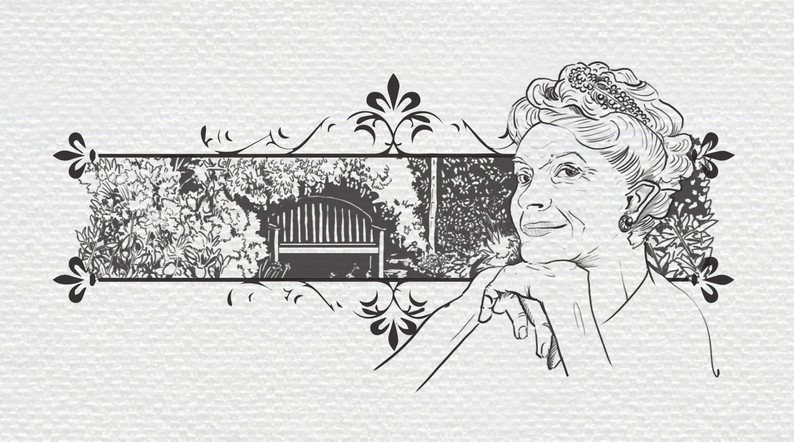
The pitch is this: the player characters are carefree Fops/Fopettes/Young People in turn-of-the-20th-century jolly old England who just want to host picnics and parties and sporting events while a shrewd Matriarch (GM) attempts to force them to marry and take on responsibilities and many other dreadful things. The key media touchstone for the game is the writing of PG Wodehouse, the author of the Wooster and Jeeves stories. Each session, the Matriarch determines which element of her Trust she intends to execute and hand off to the Young People and they must find ways to stymy this new responsibility.
The mechanical genius of the game is that two separate decks of cards are assembled at the beginning of play. One is heavily weighted toward low-value cards and contains no face cards - this is the deck from which the Young People draw - and the remaining deck is used for the Matriarch's hand. This makes it very hard for Young People to take tricks unassisted. Tricks act as both the action resolution for the system (taking the trick typically results in getting what you want or avoiding a negative outcome) and as a tally for "social standing". This means that players want to help each other to succeed in order to prevent social ruination, but assistance incurs a negative resource and provides the other player with social standing that you jealously desire.
This coopetition seems like an excellent vector for natural and playful intra-party disagreement and conflict that is often sorely missing from the adventure gaming and traditional RPG space. Games with adventuring parties often struggle to balance competing objectives between players - this Bluesky thread by bankuei summarizes the reasons for this. Obviously TftJG is thematically lower-stakes than your typical adventure game - there is no TPK in a Wooster and Jeeves story, the worst-case outcome is multiple characters getting mud on their pants. But here we have a system wherein players have mechanical levers to pull to assist one another if they so choose, but if the acting player is acting against your interests then you can hang them out to dry! I think it's brilliant and I can immediately see ways to work similar mechanics into adventure games, like choosing whether to wager hit dice to assist a fellow player with a task if you support their efforts. In general, more RPGs should lean into cooperative gambling systems like craps, but that's another blog post I have in my queue.
A Model of Resisting Change
After reading through TftJG, I downloaded an audiobook of Wooster and Jeeves stories to listen to in the car or around the house. What struck me is that these stories, written in the early 20th century, feel so breezily modern in their pacing and tone. They are shockingly close to episodes of Arrested Development or Seinfeld! I was in college when Chuck Klosterman wrote his essay on how villainous Seinfeld is, so it hit me deeply in my uncooked prefrontal cortex. I didn't actively watch many sitcoms growing up, so it hadn't really sank in how much of the sitcom formula (or any serial/episodic formula) resists change and returns to the status quo. Larry David explicitly wanted Seinfeld to be a show where the characters didn't learn lessons, didn't acknowledge their shortcomings, and didn't hug it out at the end of the show. The show didn't waste the audience's time convincing viewers that these are sympathetic people, it had jokes to tell.
This model of narrative stands in harsh relief to what we reviewed last month from Vincent Baker's series on Powered by the Apocalypse. The Ursula K Le Guin quote he leans on in Part 6 tells us that change is the universal aspect of stories. The player characters in Tales from the Junior Ganymede, however, are actively trying to resist change, to live in a perpetual idyllic English youth. Similarly, sitcom characters tend to resist and react to changes in their circumstances, regardless of what hijinks it takes or how miserable their circumstances are to an outside observer. What does it mean to have an RPG that emulates "a show about nothing" where interesting, fun, and fruitful play can still happen? I think this model of trick-taking coopetition gives us an excellent toolkit.
One design challenge here is that TftGJ is, intentionally, refined in scope. It is a game for stories about a particular class of people in a particular time and place. This means that the Matriarch's playbook focuses on presenting challenges to the PC's specific status quo. The PCs in return use playbooks that are setting-appropriate archetype. In order to expand the scope of this game model to the scale of a contemporary network sitcom, we need to tackle a few things.
The Subgenre Opportunity
The GM's playbook needs to be relevant to the setting and nature of the group of player characters. The problems that It's Always Sunny in Philadelphia's "Gang" encounters are different from the problems that the Malcolm in the Middle's family encounters, at least for the most part. There are two approaches that I think would be fun to explore.
My first order thought is that, at session zero, the table decides what type of sitcom they are - Scrubs/The Office? Workplace. Malcolm in the Middle/Full House? Domestic comedy (dom com). Cheers/It's Always Sunny in Philadelphia? Bar-centric. Friends/Seinfeld/How I Met Your Mother? Group of oddball adult friends. Thus you end up with a Blades in the Dark style "Crew Sheet" that focuses on different clusters of challenges to emulate Galen's model of the "Trust Map".
My friend Zak H at Bommyknocker had an interesting alternative idea, however - small GM sheets/templates for common sets and settings with special moves for the group's "default" location. Why shouldn't particular troublesome NPCs get lair actions like an Ankheg in a magical cave? I think this has some juice behind it and I will definitely be exploring it.
Ruination Reloaded
The other avenue I've been exploring is Tales from the Junior Ganymede's approach to harm. Due to genre conventions, harm focuses on the idea of "Ruination", a set of social embarrassments that could result in your Young Person being forced to grow up and make something of themselves. Subordinated to Ruination are PBTA/FITD-style "Distress", which can be defined in play but are limited to minor embarrassments and bruisings until they escalate to Ruination. I've been pondering major changes that come up in Sitcoms and what that could mean in a genre game, and I've boiled it down to a small number of categories. Each category then has about 3 stages of change through which it can progress.
- Finances (Indebted, Broke, Ruined)
- Health (Hurt, Hospitalized, Comatose)
- Relationship - Starting as Single (Dating, Engaged, Married)
- Relationship - Starting as Married (On the Rocks, Separated, Divorced)
- Social (Embarrassed, Excluded, Shunned)
- Child Star Specific (Voice Cracks, Growth Spurt, Aged Out)
My thought here is that the ultimate consequence for a character in a sitcom is that they are written out of the show, but that is something that happens due to off-camera events. So what if the reason that a character is experiencing negative consequences and life changes is that, off-camera, the writers and producers are toying with writing them off the show? I envision a "Meta" track of consequences where, as characters accrue and attempt to reverse changes to their status quo, they are risking advancement on this Meta track from "Creative Differences" to "Featured only in B-Plots" to, heaven forbid, "Written Out of the Show". This might be a little illegible of a concept, but if I don't get it written down then I'll never be forced to clarify it!
Thus, our game, our narrative, and our model of resisting change is based in a mechanical foundation of competitive cooperation between players who are presented with zany premises by a GM who wants to see the players work with and against one another to keep the serialized "show" going. Players want to accrue tricks, maybe to stand in for laugh lines that make them an audience favorite, and they want to keep their cast of characters from changing so much that they end up with Ashton Kutcher in Two and a Half Men.
You can obviously tell that I've had some fun with this development experiment - I hope it is fun to read about! If you haven't already been convinced, I very much recommend checking out Tales from the Junior Ganymede and Galen's other projects at Nightjar Games. I think whatever results from this will be a mostly personal project, but depending how it pans out I may put up an ashcan copy this year. Keep blogging, sickos!