Fight or Flight, Tense Decisions in Tabletop RPGs
A few weeks ago, Lyme at Brackish Draught made an observation that really stuck with me:
The "in times of crisis you revert to your training" thing isn't just for gunfights. It also goes for any fast-moving, high tension situation. It could be a social crisis where escalation to violence isn't possible, or even a large group of people like a ship's crew trying to respond to an electrical fire.
Tactical infinity and creativity in combat are mostly for fight choreographers. Actual emergencies or battles, every procedure you've trained for is a button. If you aren't a professional military or first responder service you probably don't have a lot of buttons to press. You might only have one, and the only option is press it or not.
I can't speak to gunfighting personally, but a few years ago I had to do some firefighting training for work. Maybe it's because it was only a week-long course, but there was not a lot of tactical infinity involved in basic emergency response. You learn an extremely limited toolkit or algorithm of known processes that are guaranteed to improve the situation and if you deviate from them, someone will probably die.
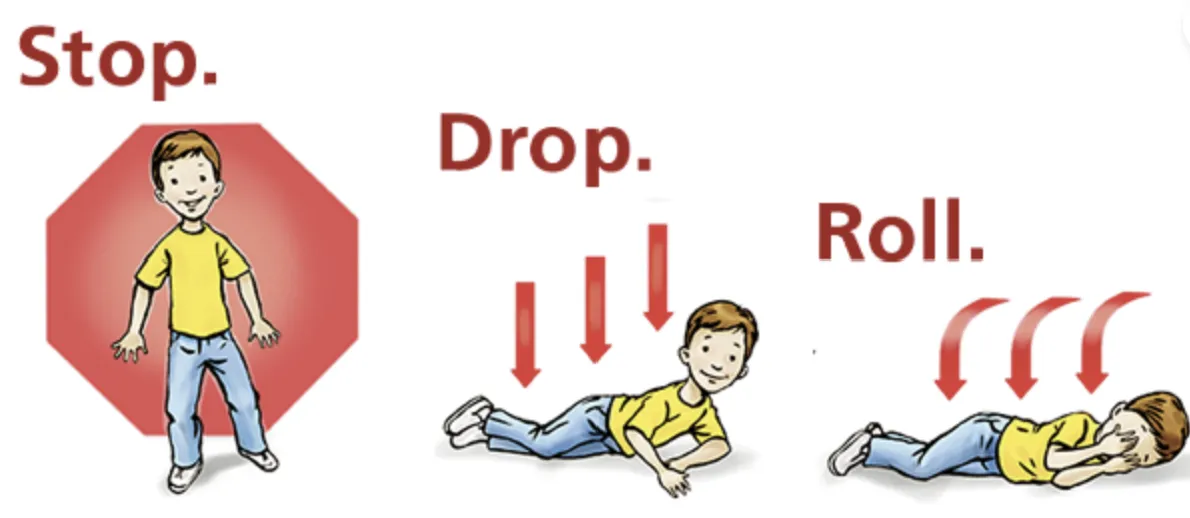
Everyone Has a Plan Until They Roll Like Shit
Turn-based subsystems, especially turn-based combat subsystems, provide the lusory experience of modeling a sub-1-minute fracas with up to two hours of discussion and negotiation. In the absence of a speed chess timer on each player's turn, each person has an arbitrarily long period of time to put themselves in the shoes of the character and deeply consider how they will use the next 2-10 seconds of mayhem. Not for nothing, but if you actually put yourself into the shoes of someone making a life-or-death decision in the face of overwhelming stress, they're probably going to default to the classic Fight, Flight, or Freeze.
It might be ironic for me to say this as a primarily OSR blogger, but I think games that encourage players to have something of a default action plan might actually model this tendency better than games that emphasize creative problem solving after you've rolled for initiative. If you have built a character who has a set sequence of actions they need to follow to "come online" and take command of a fight, that feels a lot more like someone who has trained diligently to do the correct thing (or at least a specific thing) every time they hear the battle theme start.
Cinematic depiction of TTRPG combat
Where these games tend to lose me is when these combat scenes drag on relative to the in-fiction time that they represent or the in-fiction significance of the event. At the risk of indulging in platitudes or truisms, a 2d6 wolves encounter in the wilderness is a lot more palatable when it can be resolved in a few minutes rather than half an hour. If players have a default plan of action in their heads, the scene will probably resolve faster as a matter of course, but you are still subject to the cognitive and process load of the resolution engine.
As an aside before I get to my point today, a more OSR-shaped game that captures my imagination on this front is His Majesty the Worm. In brief, players are dealt a hand of cards each round and the suits of the cards tell the player what actions are available to them. This acts at two levels - exogenously it tells players how broad and effective their decision space is for the next ~10 seconds and endogenously it tells characters what opportunities are available to them, how sure their footing is, whether they can line up a clean shot, and so on. It is a ludonarratively dense design.
Building the Rocket

Biblically accurate PF2E party
In her Optimizer Culture Manifesto, Serket at Fluorite Guillotine observes:
A non-trivial amount of optimizing fun is about making decisions well in advance of their relevance. It’s sort of like building a rocket, and then playing at the table is seeing how well it flies. The joy during the game comes from seeing how your expectations play out.
This framing of optimization as a form of fun or play that displaces decision making and execution has been stewing in my noggin for a while. In the terms of IIEE, or Intent, Initiation, Execution, and Effect, the idea is that players perform some amount of Intent and encode it into their character sheet in between sessions, or during a level-up, or during a designated snack break. The Initiation then comes into play when the GM starts their battle playlist, and Execution and Effect are adjudicated turn-by-turn, action-by-action.
This all sat dormant until I read Skeleton Code Machine's Spell programming and action queues in Black Rose Wars. How far could we potentially take the idea of action plans in a tabletop RPG? Could it synthesize the feeling of a skilled and trained character while speeding up the adjudication and resolution process of play? Does it capture the same essence of launching the model rocket?
Action Programming
Here's my basic pitch. Over the course of character creation and character upkeep, players manage three default action plans:
- Fight Plan - Who in the situation do you aim for, how do you typically subdue them, how far do you take it before the adrenaline wears off?
- Flight Plan - When the going gets tough, how do you flee or hide?
- Freeze Plan - How do you observe the situation to make your next decision, how do you protect yourself?

These plans are composed of some number of atomic, deterministic actions which players select and concatenate during prep or downtime. The plans are then assigned to some spread of outcomes on a 2d6 roll - a headstrong warrior may default to their Fight plan an overwhelming proportion of the time, but there are times that they still may flee or freeze up. A nervous scholar, on the other hand, may only Fight in extenuating circumstances but may have strategically useful actions for when they Freeze.
When the first punch flies, or when it's clear that adrenaline is about to surge, each player rolls 2d6 and declares which plan she is enacting. Since each plan is a queue, it could be resolved roughly simultaneously in a round-by-round basis. If two plans contradict one another, I envision a Rock/Paper/Scissors relationship where some Fight actions are stymied by Flight actions, while others are countered by Freeze actions, whereas someone who Freezes probably ends up in an advantageous position relative to someone who turns their back and flees.
Critically, after all plans have resolved, the state of play should be different enough that a fairly clear outcome of the scuffle has been decided and can be adjudicated in-fiction. Alternately, once the first set of plans have resolved, players can either choose one of their trained action plans to pursue next, or they may spend a resource to compose a more freeform action queue for the remainder of the scene.
This thought experiment pursues a few end goals. First, I am interested in players expressing Combat as Characterization by showing, rather than telling, how their characters handle extreme stress. Second, I am interested in these scenes not overstaying their welcome, a la Three-round combat. Third, I think it is interesting to explore a total decoupling of Intent, Initiation, and Execution:
- Intent - Encoded as a solo activity and temporally displaced from the rest of play
- Initiation - Likely not in the hands of the player; action is initiated in response to someone in the scene throwing the first punch and the actual course of action that is initiated is randomly selected
- Execution - I think the discrete actions should be deterministic and success-oriented (as long as any potential conditions are met). The point is that we are simulating the things that your character has chosen to train to perfection
- Effect - This becomes the center of play at the table. The actions that are queued up happen in order and they succeed - what are the consequences?
This post has conceptually focused on combat, but I can see a world where Fight is replaced with Finesse, which are encoded skilled actions that a character has trained to execute under duress rather than freezing up or avoiding the challenge.
What do you think? I'd love to hear if anyone has experimented with this idea in other contexts or settings. Serket recommended that I look into Final Fantasy XII's Gambit system. I think something like this probably works best working with small numbers like The Manse discusses relative to Paper Mario's approach to granularity, but I would need to spend some more time in the design mines.