Ballroom Blitz - Tactical Court Intrigue
This morning Liz over at Magnolia Keep offhandedly made a joke about a tactical RPG for concealing your affair at a Coldplay concert (it made sense in context of the conversation). As we all know, a tactics RPG is when you have a grid, and the more grid-based it is, the more tactical is it. This set my mind racing though - is there anything higher-stakes and higher-tactics than the politics of a ballroom dance?
The Situation
1-3 players are attending a high-society function. This works best if they have concrete objectives in mind for why they are at the function, but you could conceivably use this as a way to seed other hooks and rumors for the players. The basic player objectives in a Ballroom Blitz are:
- Maintain your own reputation. Keep up appearances, dance your ass off, don't get too drunk.
- Embarrass a Rival. Prevent them from dancing with a partner, engineer a spilled drink, or spread a rumor about them.
- Discretely pass/receive a message. Find a way to dance with someone important for long enough to share information that they need without anyone getting any funny ideas.
- Discover a secret. Convince someone to share information that they didn't intend to divulge.
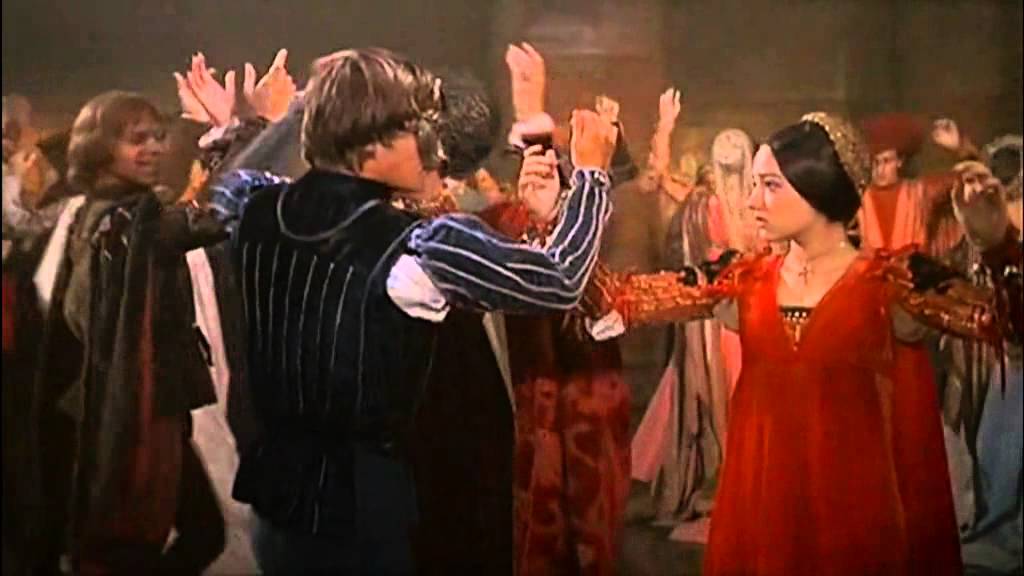
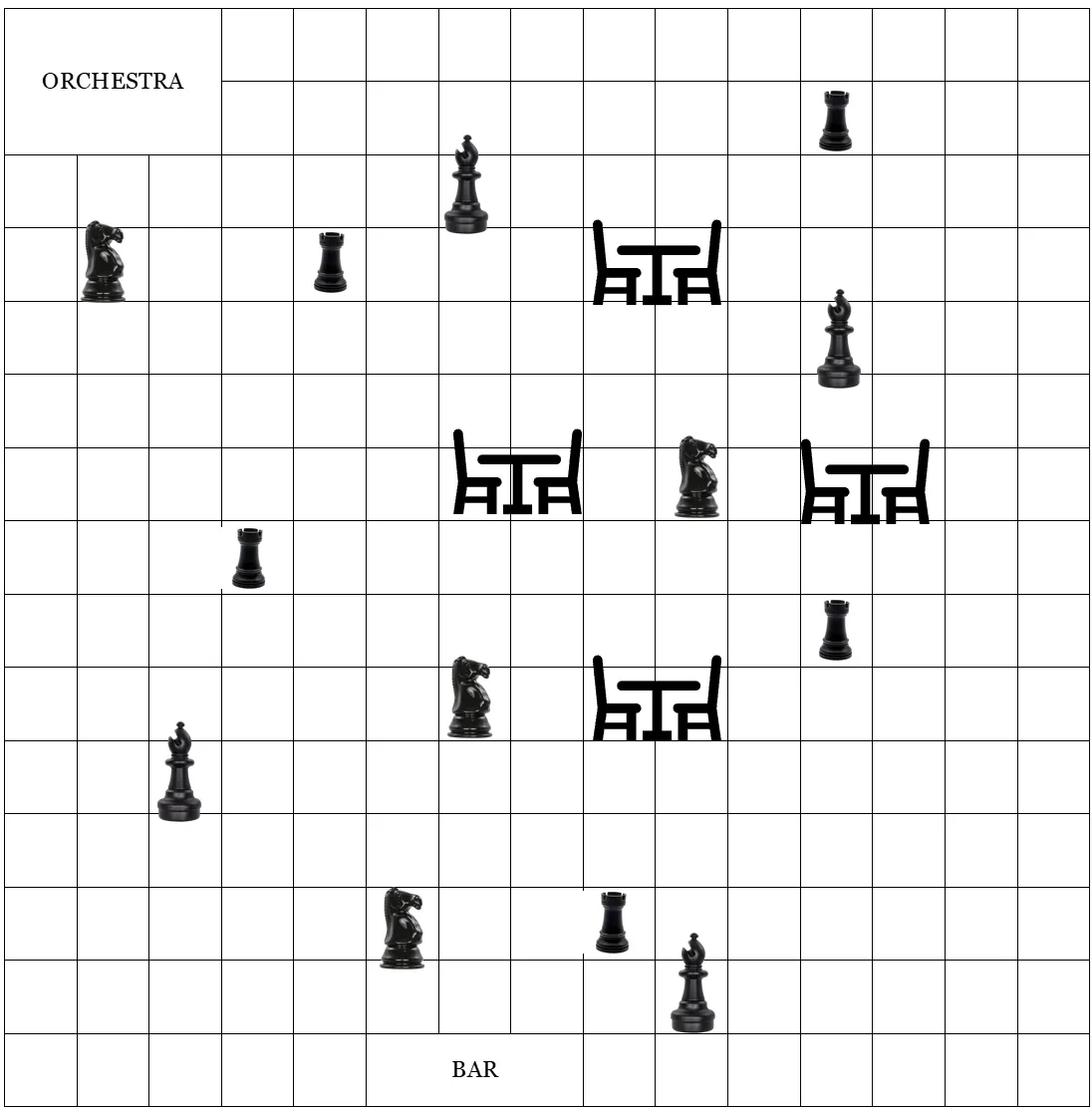
Now. Draw your ballroom on that vinyl battle mat that I know you have if you've run in-person games. Your ballroom needs:
- A section for the orchestra, which is the source of the music. When you're within a few tiles of the orchestra, no one can eavesdrop on your conversation, but you may be seen whispering in the ear of your dance partner. Typically in a corner, but it's not illegal for them to be in the center of the dancefloor.
- Tables, obstacles, chandeliers. Terrain. This isn't a wedding at a convention center, your dance floor has things in the way and set dressing.
- A Bar. When you can't find a dance partner, you can always spend a song at the Bar. Pick a side or corner of the ballroom.
Who is in Attendance?
I think the obvious answer here is something akin to the "Three Estates", but tuned specifically to high society. Something like:
- The Clergy. Some members of the Church are in attendance - high ranking priests. Priests are great sources of intrigue because they have likely heard some juicy confessions, but those are also hard to extract because of "ethical and ecclesiastical considerations". Additionally, the clergy are liable to be vulnerable to rumors and blackmail if their past is checkered.
- The Military. Knights, bannermen, men-at-arms. They have a volatile place in high society because they are temperamental. Knights often spend the most time out of court, so they have access to rumors and information from far afield. Knights tend to be vulnerable to being challenged, whether it is their authority, their right to be in attendance, or generally their competence.
- The Nobility. The droll landed gentry of the court, men and ladies chattering about the ball. Nobility can spread rumors like wildfire with their idle gossip. They tend to be vulnerable to general embarrassment.
- The Staff. The servants, helping hands, and musicians at the function. They tend to be off of the dance floor, but they are bored, stressed, and nosy.
- Your Rival. Your rival is typically a member of one of the above groups, but you have a personal relationship with them. They are working against your interests and you theirs.
How Does it Work?
General Movement Rules
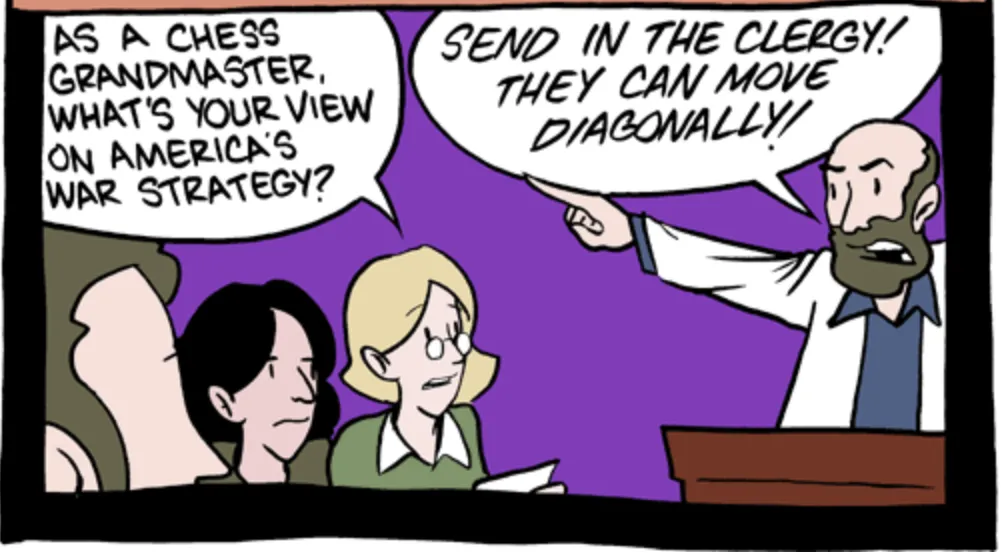
The game uses the movement rules of chess. The Clergy can be represented with a Bishop and can only move diagonally. The Military can be represented with a Knight (horse) and can only move in an "L" shape. The Nobility can be represented with a Rook (castle) and can only move in cardinal directions. Players without a dance partner can move in any direction, like a King or Queen.
Opening Configuration
The Conductor (GM) places the attendees around the ballroom, a grid of 5ft tiles. All named non-player attendees are assumed to be dancing with a partner at all times unless players specifically disrupt or spurn them.
Players start the night within 1 tile of the Bar. The Conductor should place some attendees close enough to the Bar that players can begin dancing within the first song.
Each player starts the function with the following empty clocks:
- An empty four-segment clock for Embarrassment. When it is full, you are Embarrassed and will have a hard time getting a dance partner for anything other than a Waltz unless the potential partner is a close friend or drunk.
- An empty four-segment clock for Style. A full Style clock can be spent to erase a segment of Embarrassment, to request a dance, or to get past someone's reservations.
- An empty six-segment clock for Drunk. When you are Drunk, people are more likely to find you generally boorish, but you swear that you dance better.
Dances
There are four basic types of ballroom dance. Tango, Quickstep, Waltz, and Foxtrot. Now, you may note that most of these are 20th century dances and you may want to do your own digging into more historical types of dance, I just wanted something I could roll on a d4 that would have some distinctive flavor.
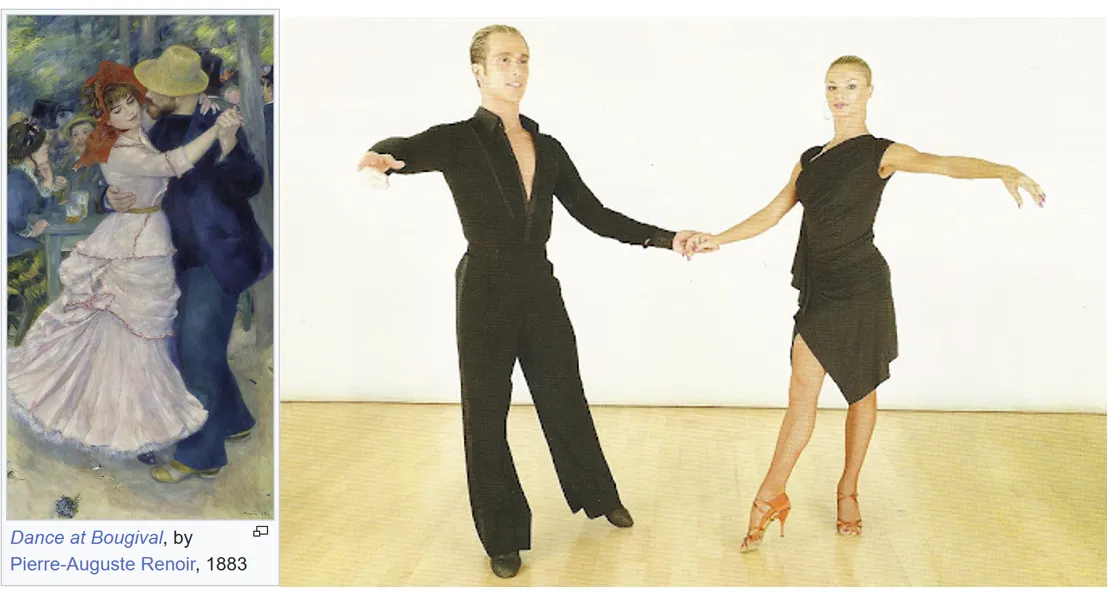
Closed position on the left from Wikipedia. Open position on the right is the most uncanny image I've seen today
- Tango. Tango is a medium-paced and somewhat sensuous closed-position dance. Tangos last for four turns and each couple makes one move per turn. The closed position makes tangos a useful dance for exchanging information quietly between partners. It is hard to eavesdrop during a tango. It is quite scandalous to be seen in more than one tango in a night with someone you are not openly courting.
- Quickstep. Quickstep is an up-tempo dance. Quicksteps last for two turns and each couple makes two moves per turn. Quicksteps are useful for moving briskly across the dancefloor but make for poor conversation.
- Waltz. Waltzes are a slow, rolling dance in closed-position. Waltzes last for three turns and each couple makes one move per turn. Despite the closeness of couples in a waltz, it is unremarkable to even be seen waltzing with a rival or someone you find to be rather boorish.
- Foxtrot. A foxtrot is a smooth, rhythmic dance to a syncopated tune. Foxtrots last for four turns and each couple makes one move per turn. Foxtrots are quite technical and it is not considered garish to showboat your skills during one.
After each dance ends (within the number of turns identified above), the Conductor rolls a d4 to select the next dance. Alternately, if a Player is dancing with a partner next to the orchestra, they may make an action to request a specific dance type of the band.
Turn Structure
Each turn, the Conductor either chooses or rolls a die to determine which direction the non-player dancers will move and indicates this intent to the players. By default, a dancer without an agenda will tend to dance approximately clockwise around the ballroom. This movement does not resolve until the players have made their movement.
If a player's movement puts them adjacent to the tile where a non-player dancer's movement begins or ends, then the player may invite that person to dance. By default, dancers will accept this invitation unless there is specific bad blood between the dancer and the player. Dancers will always accept an invitation during a Waltz.
While players are uncoupled, they occupy a tile and can move one space per turn (or two spaces for a Quickstep). While players are coupled, they share a tile with their dance partner and can only move in the direction allowed by their social class. Clergy and Nobility can move one tile per movement. Military can move in an "L" shape once per movement. If two players dance together, they can move in any direction.
Any time that a player ends their turn on the dance floor without a partner, they must fill in a segment on their Embarrassment clock or go directly to the Bar.

In addition to their movement for the turn, players can take an Action. Conductors should embrace tactical infinity from the players here, but a basic set of actions that make sense for this game is:
- Couple/Uncouple. Inviting a new partner to a dance or excusing yourself from your current partner. Note that it is quite rude to fail to finish a full song with a partner. They will remember and attendees will certainly notice. If you are partnered and your movement places you next to a new dancer, you may directly swap partners with this action.
- Speak Openly. Casual conversation with your dance partner to get to know them. Note that what you talk about can be heard by other dancers around you. This includes asking questions and talking about yourself. In one turn, you can basically ask one question and receive one detailed answer.
- Conspire. Whisper with your dance partner. Similar to Speak Openly. This is conspicuous in any non-Tango dance but cannot be eavesdropped.
- Speak with another Couple. If you are adjacent to another dance partner, it is not rude to chat with them, but it can be heard by other dancers.
- Eavesdrop. Listen intently to another conversation of a nearby couple. If you are adjacent, there is typically a 5-in-6 chance that you can hear what they are saying. For every tile away from them, your probability drops by 1. Note that this means you are not speaking with your partner and they will likely consider it rude.
- Showboat. Attempt a particularly flashy dance with your partner. This will draw attention to you and your partner for the turn, and your partner's likelihood of enjoying this attention is based on their personality. Fill one segment of the Style clock. Different players may have different showboating techniques with different effects on their partners.
- Request a Dance. When you are adjacent to the Orchestra, you can request a specific dance from the Conductor. If you are not Embarrassed, then the Conductor rolls twice for the next dance and picks your selection if one of the rolls comes up for it. You can also spend a full Style clock to guarantee your selection.
- Invite to the Bar. If you and your partner are getting on well, you can invite them to join you for a drink at the end of a dance. It is typically considered rude to interrupt a dance for a trip to the Bar. For each turn that you spend at the Bar, fill in a segment of your Drunk clock. While you are at the Bar, you can Speak Openly or Conspire with your partner. Their lips will likely be looser for the rest of the night.
- Challenge. At the climax of the evening, you may find yourself needing to demonstrate to the rest of the function that another guest is an irredeemable, churlish bore who never should have been invited. This will draw attention to you and likely ruin the evening if you cannot win the crowd over. It is almost always preferable to soil someone's reputation through other means, but there are times when a man or lady must escalate a situation. If your Challenge fails to get over on your quarry, it is very nearly curtains for your reputation (until the next function).
You'll note that many of these actions risk you being considered rude by your dance partner. If they become frustrated enough with you, they may excuse themselves from your dance mid-song, leading you to risk Embarrassment.
End Condition
I think about 8 dances is probably enough for a function. That's something like 30 ish turns, and considering lots of those turns are slowly accruing and spreading information or attempting to poison the well for your Rival, that is plenty of time. I think this should lead to some fun emergent play of social battle and hopefully the movement rules are restrictive in a fun way and not just in a tiresome way. Let me know if this is something you'd want to try!